
BIOGRAPHY
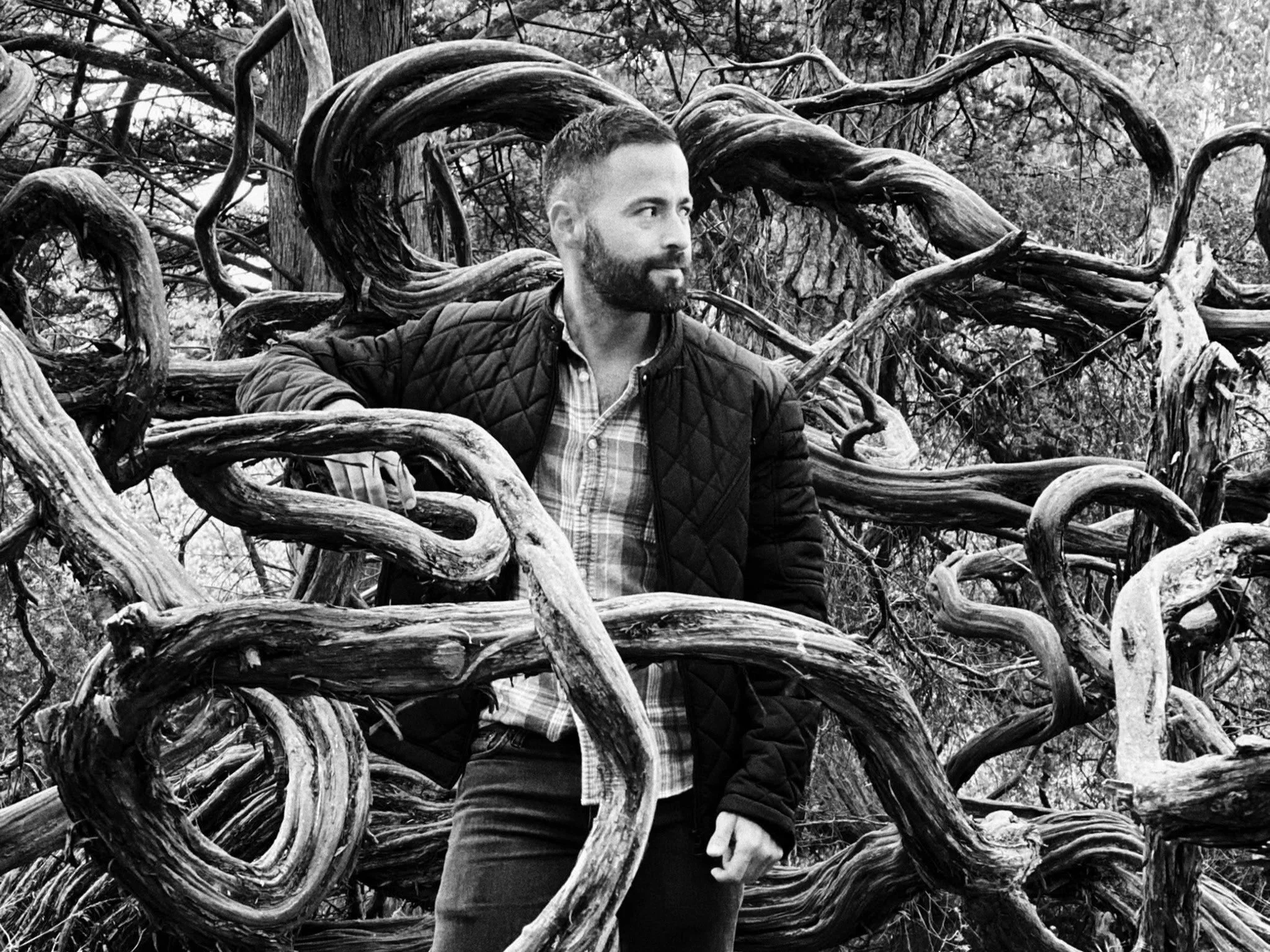
Joset Medina is a Venezuelan-American artist and architect based in San Francisco. He creates paintings and murals rooted in material process, nature, and the human figure. His layered paper paintings explore grief, rebirth, and healing through torn surfaces, symbolic form, and layered material processes.
Medina’s layered-paper technique developed through both travel and personal displacement. After living in Europe—particularly in Spain—he later traveled through Southeast Asia, including Vietnam, Thailand, and Cambodia, where the approach fully crystallized. There, he became deeply aware of surfaces shaped by time: peeling paint, eroded walls, softened patterns, and nature reclaiming architecture. At Angkor Wat, fragility and endurance coexisted visibly, shaping his understanding of beauty as something accumulated and revealed rather than finished.
That understanding became personal as Medina repeatedly rebuilt his life—leaving Venezuela, starting over in Panama, later in Spain, and eventually in San Francisco. Tearing paper became a physical way to register rupture while allowing earlier layers to remain visible. Each rip exposes earlier decisions and moments of release; some layers resolve, while others remain raw or incomplete, reflecting how growth is uneven and how healing carries traces of what came before.
The female figure has always been central to Medina’s work. She is not a portrait, but a vessel — a body that holds memory, emotion, and transformation. Growing up surrounded by women and immersed in the gardens of his mother and grandmother, within the dense landscapes of the Venezuelan Andes, he learned to see the body and nature as inseparable. In his work, flowers, branches, and organic forms emerge from the figure as expressions of growth, repair, and resilience after rupture.
Medina’s murals carry recurring symbols from his paintings into architectural space. Working with mixed media — including paint, charcoal, and at times gold leaf — he builds texture and depth directly onto the wall. Through shifts in technique and tonal variation, he introduces subtle ruptures across the surface, moments where material and atmosphere quietly change rather than announce themselves. These works soften architectural space, creating environments shaped by memory, change, and renewal rather than decoration.
Medina’s work has been exhibited internationally and is held in both private and public collections. His practice has been featured in international press and accompanied by critical writing.