RIPPING LAYERS
Current Practice . Ongoing Series
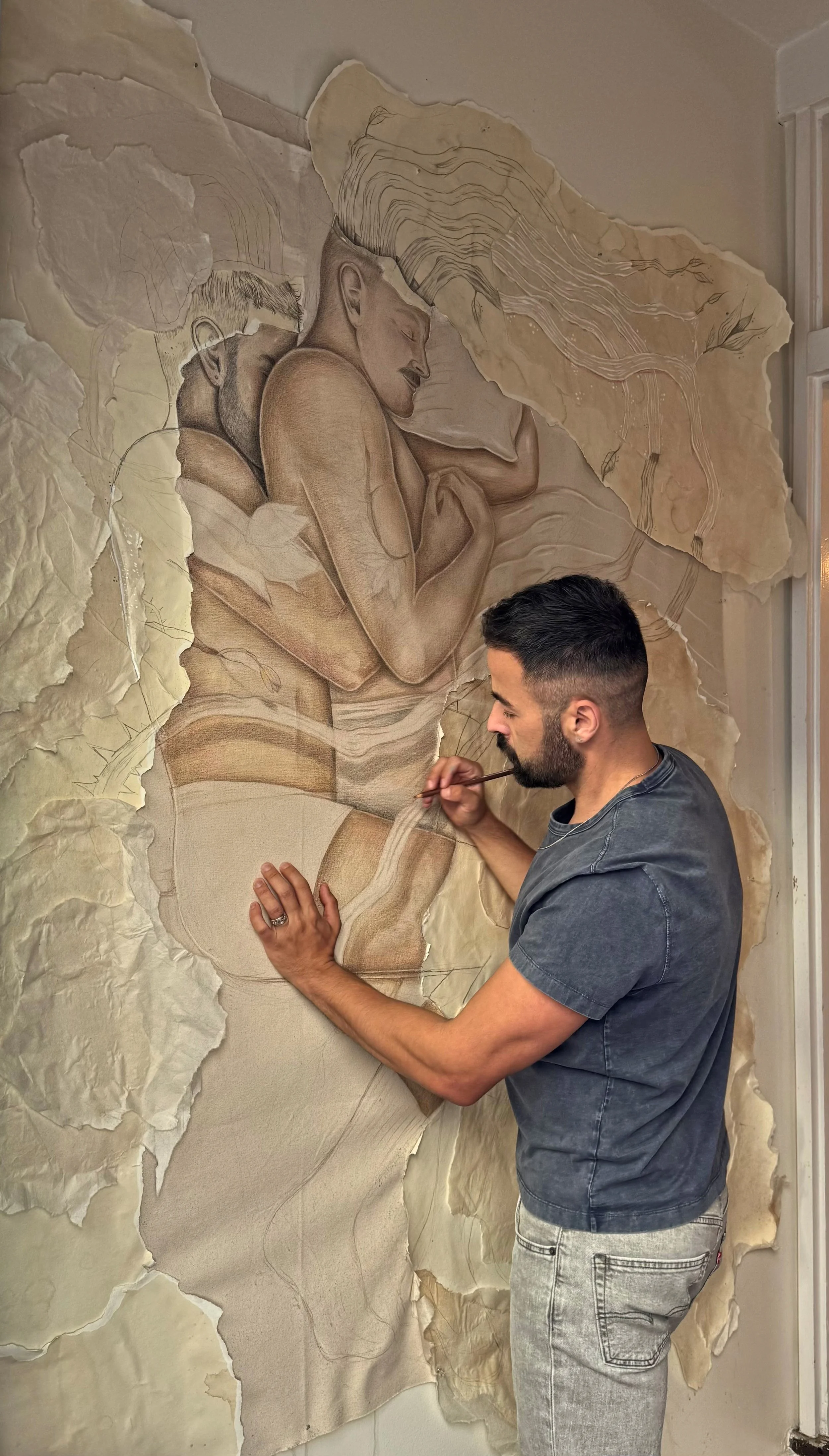
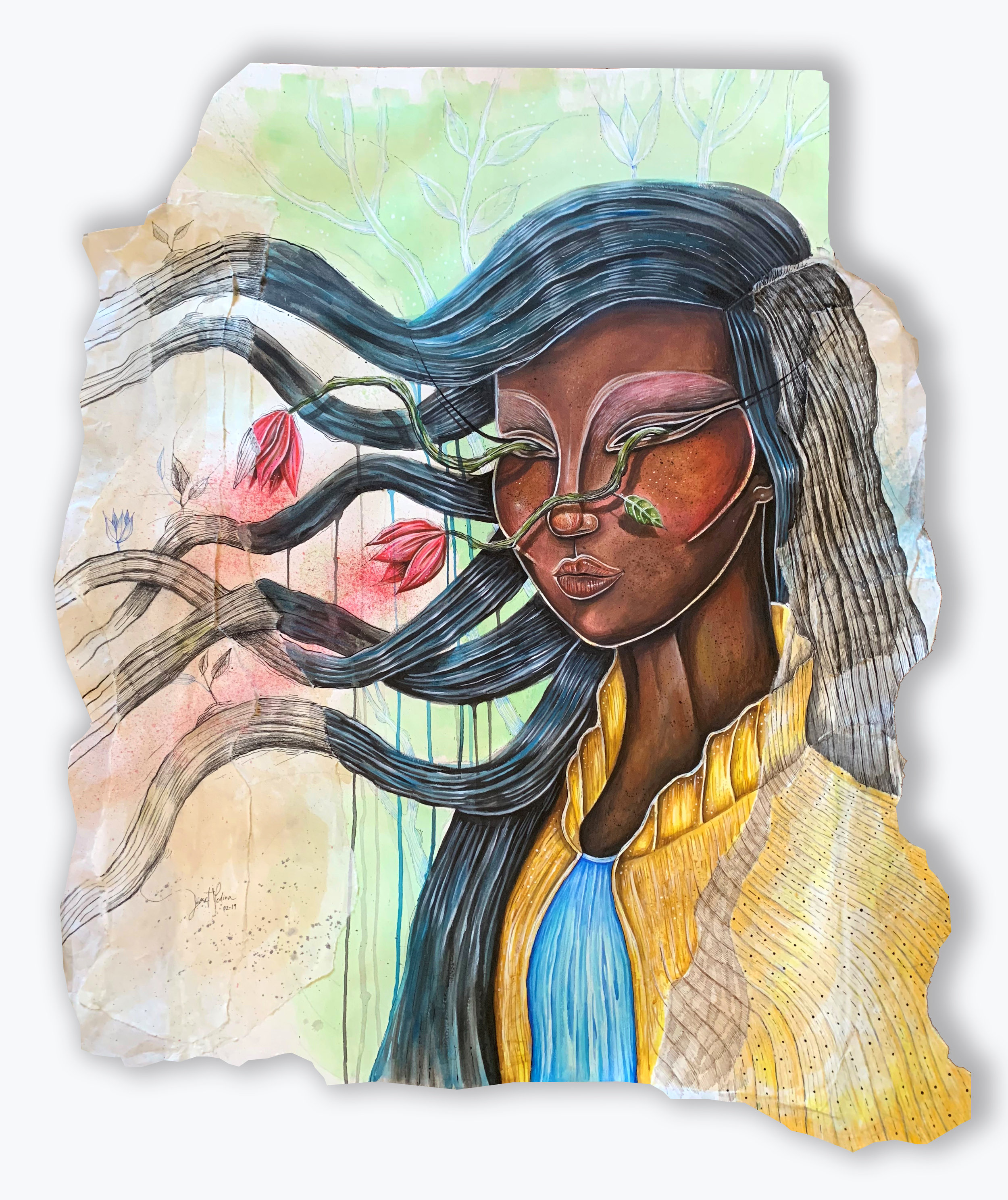
My layered-paper technique grew out of an awareness that developed over years of living and moving between places. While living and working in Europe — particularly in Spain — I became deeply aware of how architecture openly carries age, repair, and transformation. Walls bear traces of use, damage is not erased, and history remains embedded in everyday space. Moving through these environments shaped my understanding of surfaces as records of time, care, and adaptation.
That way of seeing later crystallized while traveling through Southeast Asia, including Vietnam, Thailand, Cambodia, and later Hong Kong, where I was surrounded by surfaces shaped by time. Peeling paint, softened patterns, weathered walls, and tropical plants reclaiming architecture made me aware of how history settles into materials rather than disappearing from them.
In Angkor Wat, time felt visible. Ancient stones were eroded by centuries of touch, carvings dissolved into moss, and nature folded itself back into the structures. Everything felt fragile and resilient at once. That experience shifted the way I approached my own surfaces. I understood that beauty was not a final, polished layer, but everything that survives underneath.
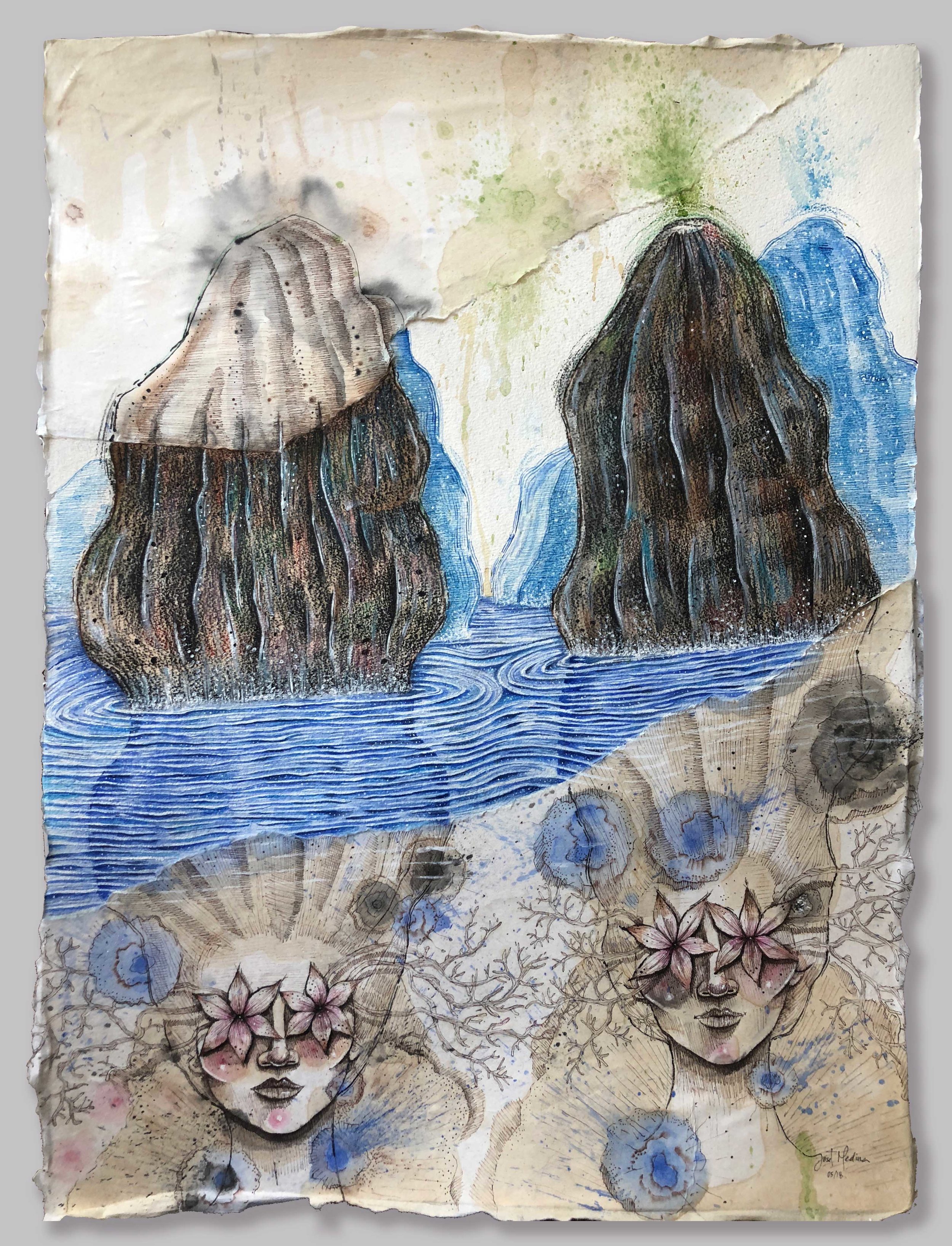
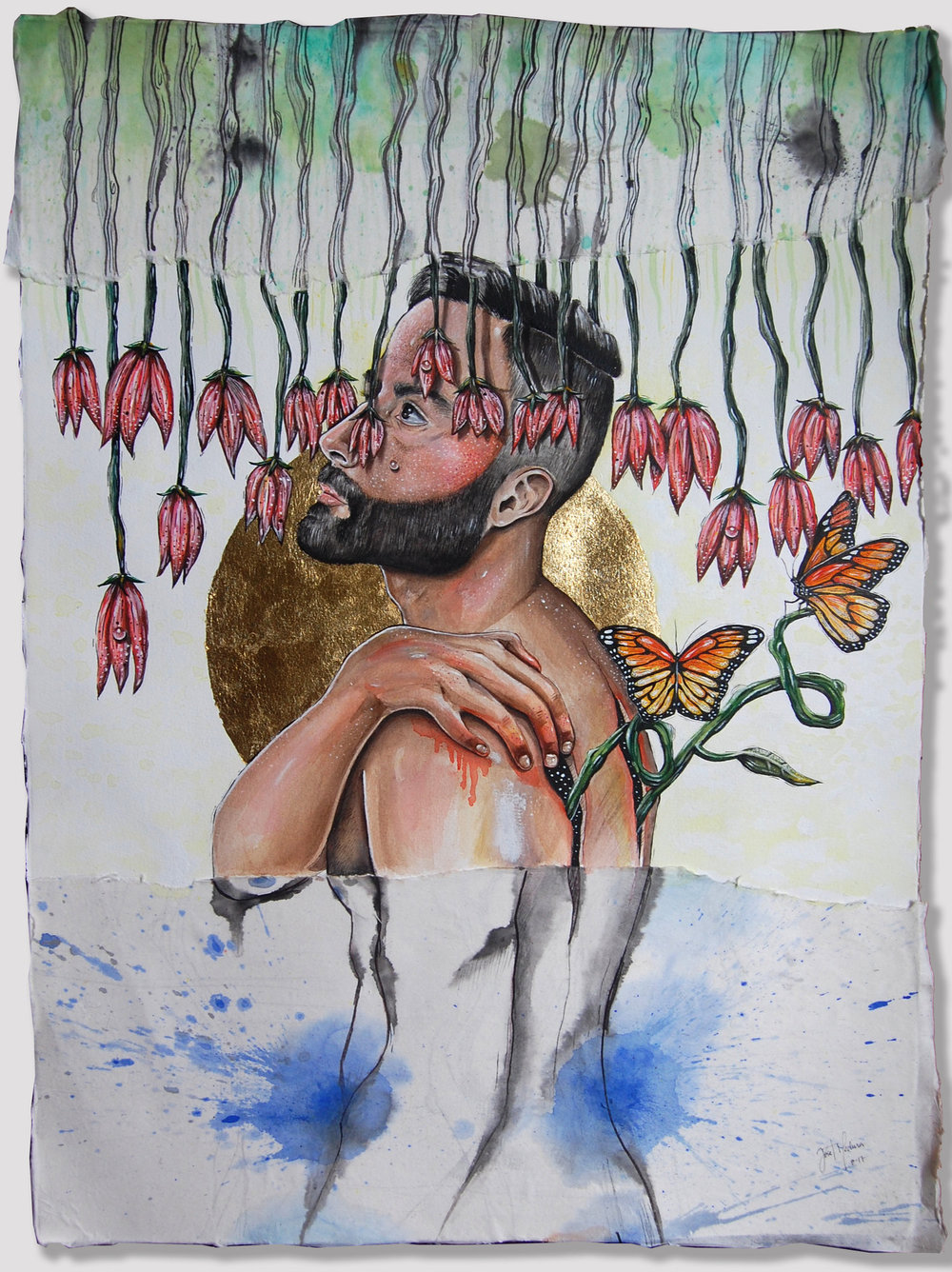
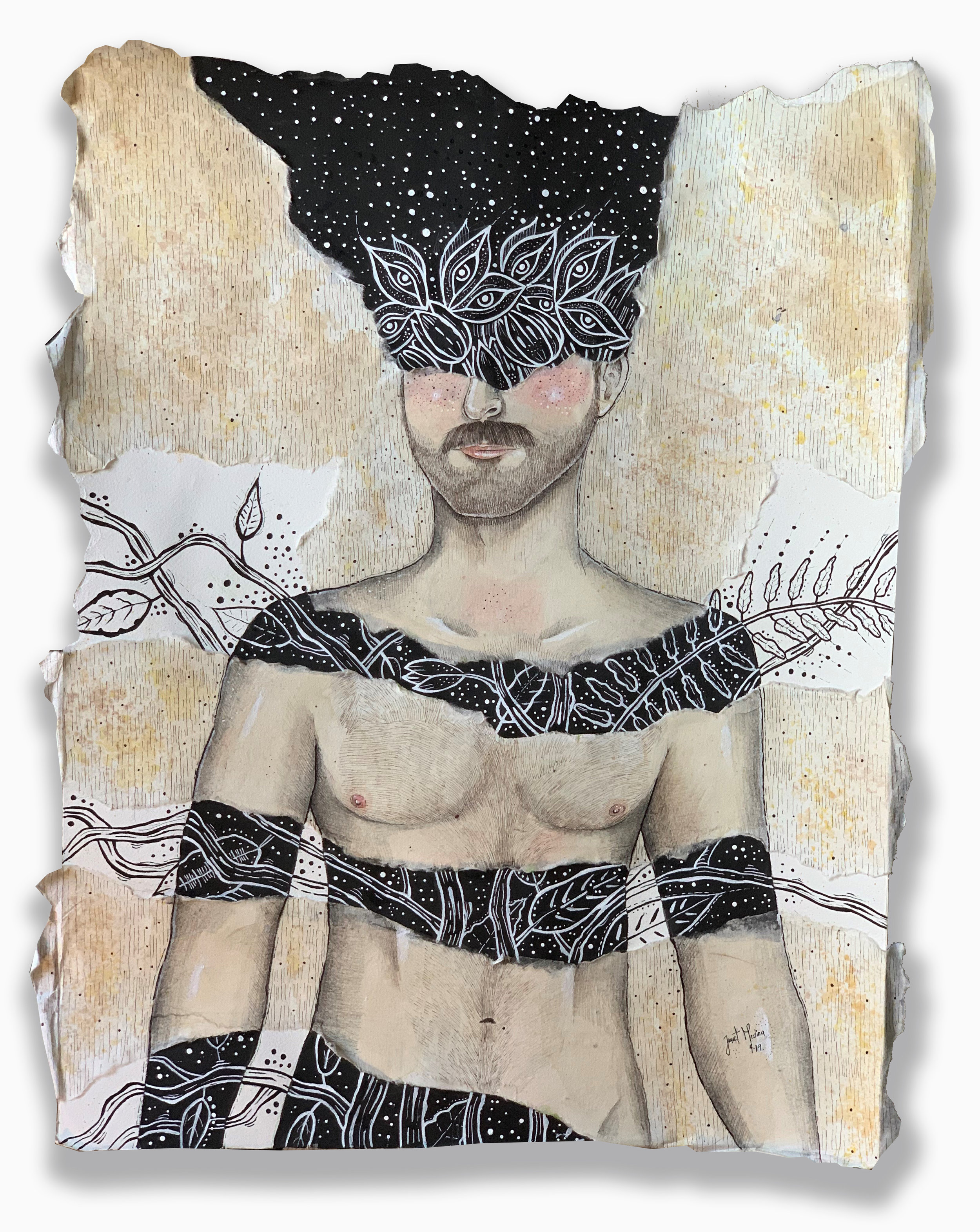
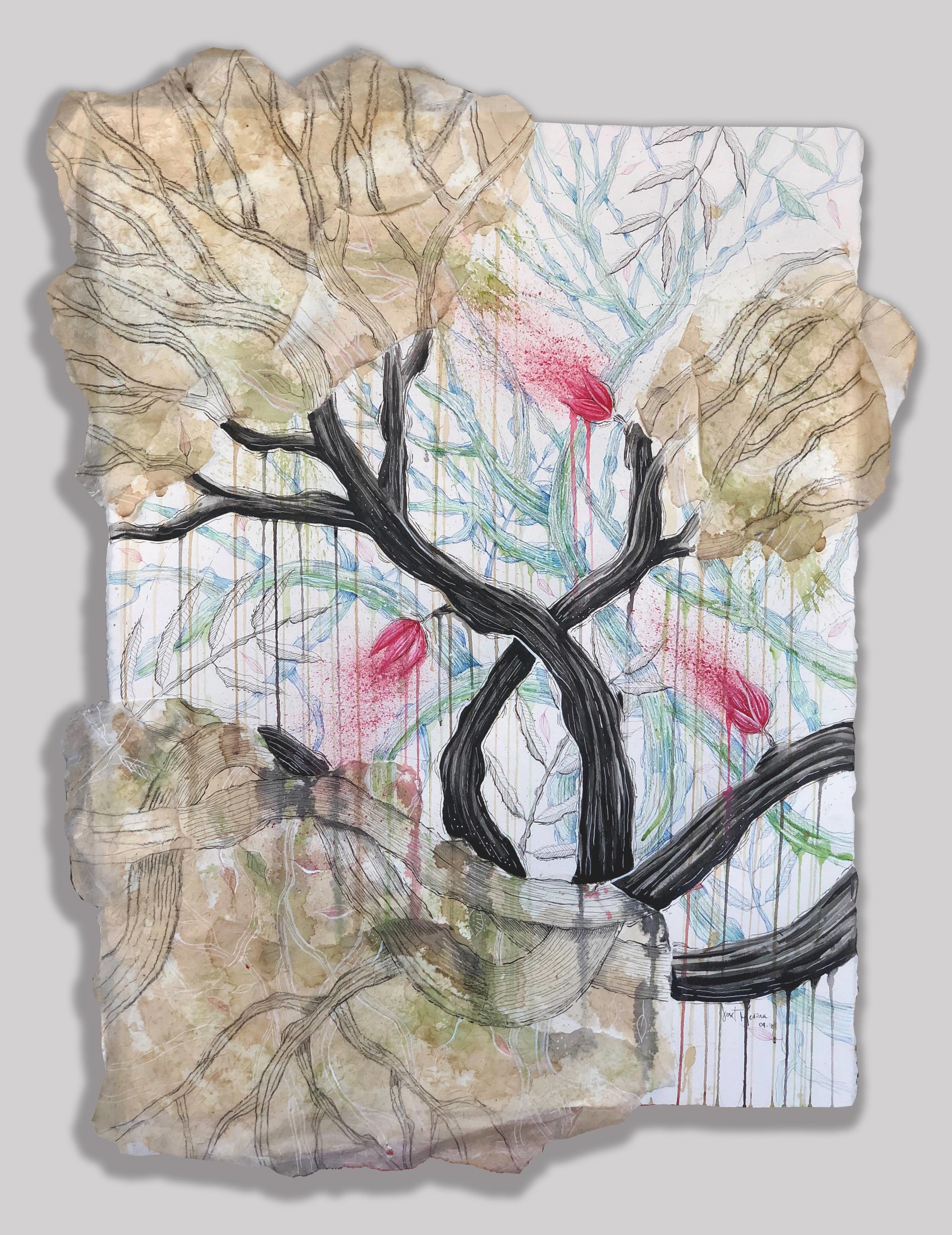
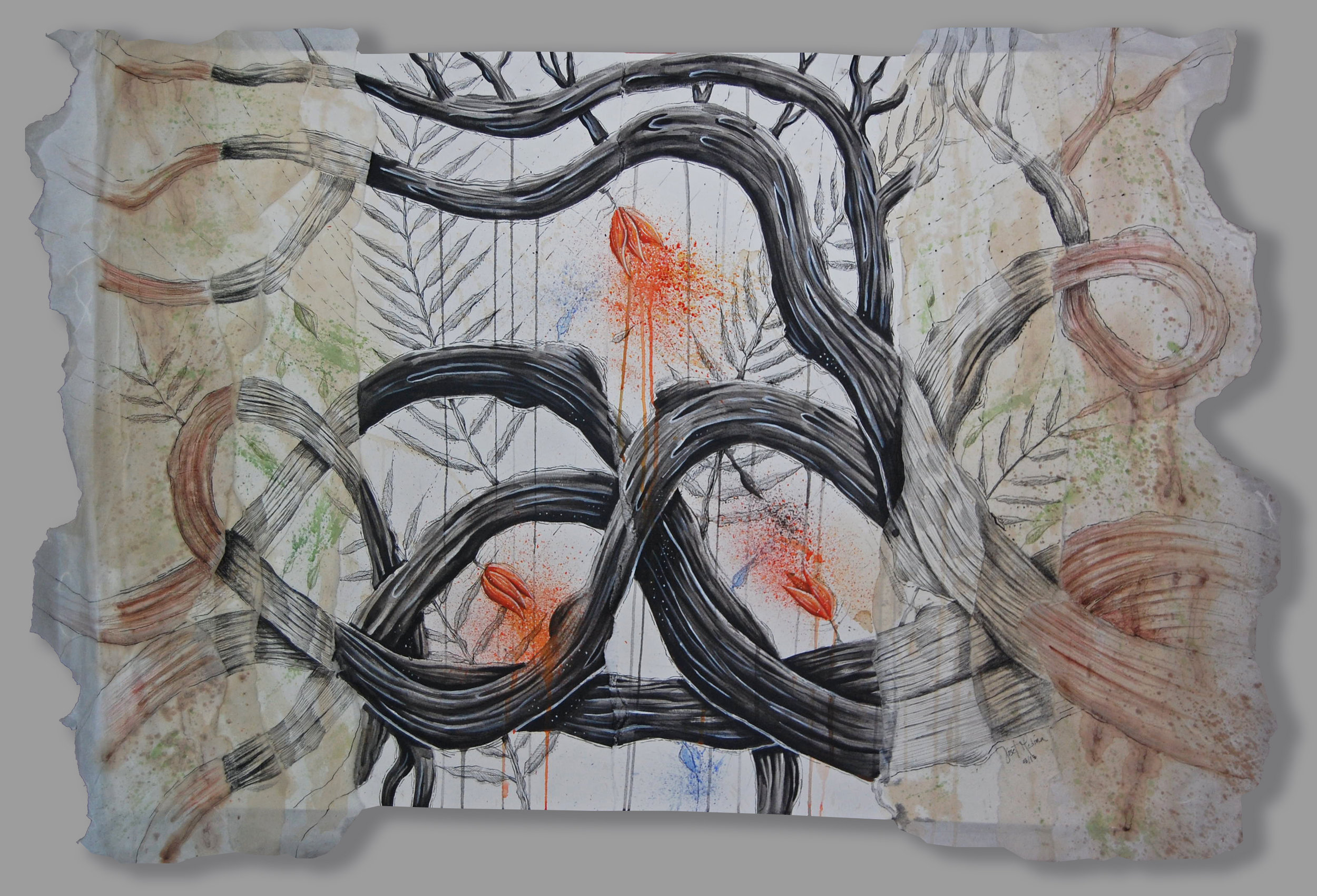
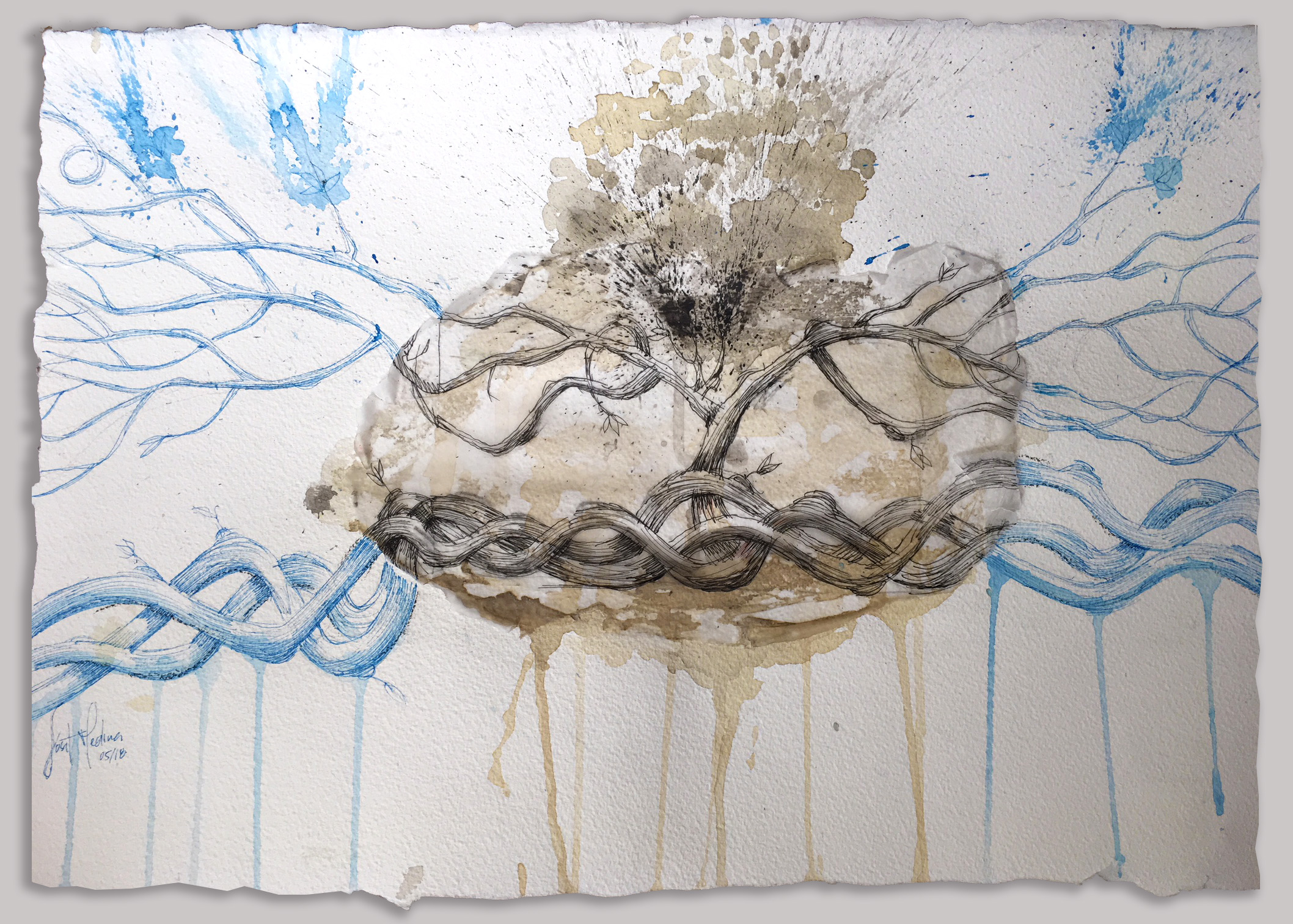
At the same time, my own life was unfolding through repeated restarts. Leaving Venezuela, rebuilding myself in Panama, later in Spain, and eventually in San Francisco meant learning how to begin again without erasing what came before. The act of tearing paper became a physical way to reenact those ruptures and reconstructions. Each rip reveals earlier decisions, moments of release, hesitation, and letting go. The exposed layers are not hidden. They remain visible as evidence of survival and change.
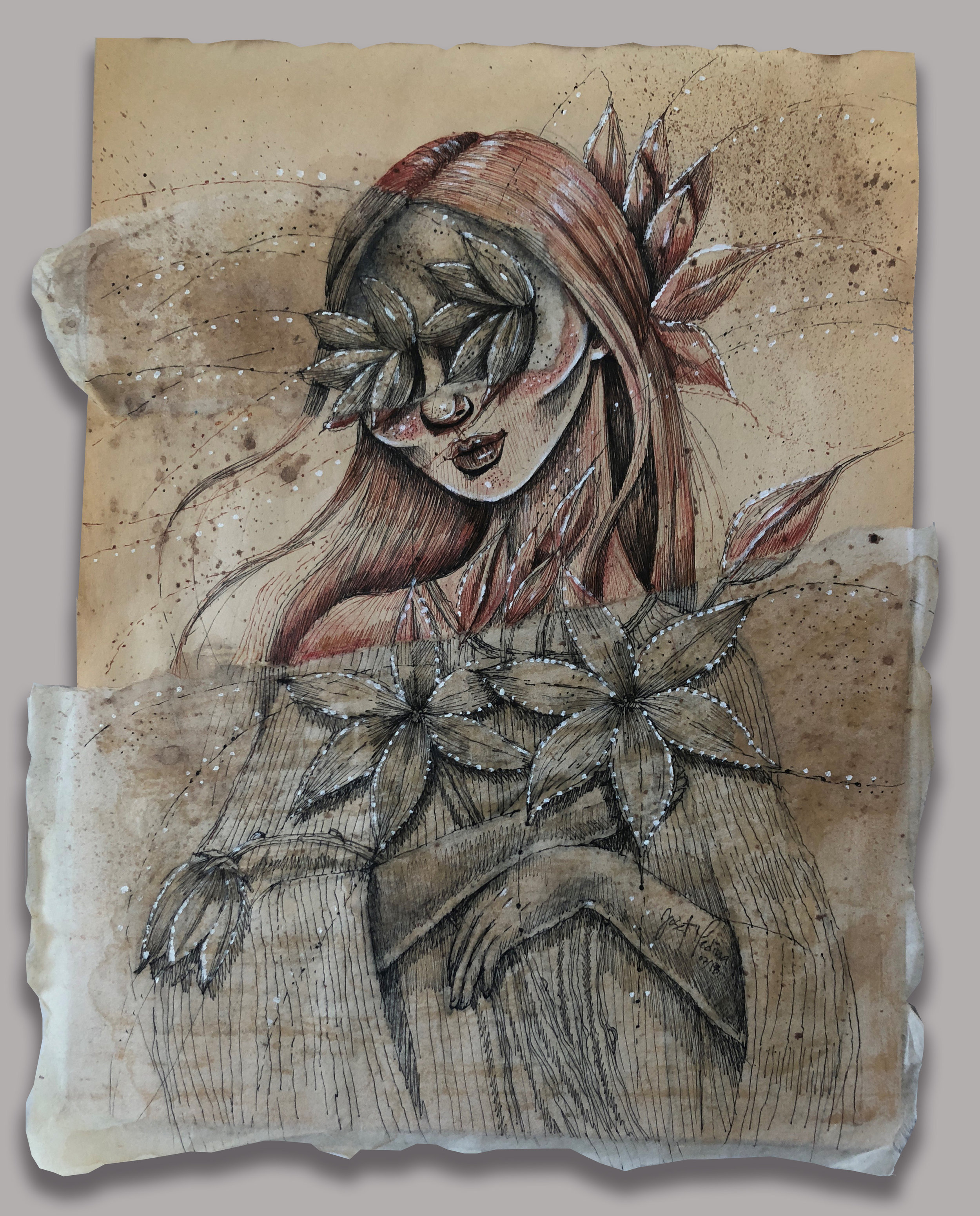
My process is both physical and metaphorical. There is a shift between each layer. Some become detailed and resolved, while others stay loose, raw, or barely sketched. I do this intentionally. Each layer holds a different version of me: fragile lines, bold marks, unfinished ideas, changes in color or mood. Growth is uneven, and I allow the work to reflect that. Not everything needs to be finished to be true.
That journey also opened a new way of looking at clothing and textiles. Visiting the Jim Thompson House in Bangkok, with its layered fabrics, hand-woven patterns, and rich colors, showed me how textiles hold memory and history. This sensitivity shaped works such as Blossoming Beyond a Bruised Heart, Embracing the Rain, Daughter of the Flower Market, and Looking at a Life Unfolding, where garments and patterns expand the emotional narrative of each figure.
Some layers feel like scrolls slowly unrolling, revealing what was hidden until the moment of the tear — history unfolding through time, damage, and care. For me, there is always a next page, another surface waiting to be revealed, another understanding of myself and others.
Tearing becomes an act of excavation.
Repair becomes part of the surface.
The layers hold what time leaves behind.
Each piece is built like the places I have lived and walked through — layered, weathered, repaired, transformed. The torn edges remain visible as a reminder that change is never clean, but it is always honest.